Textile Notes · Home Styling
Natural Texture at Home: Styling Decorative Pillow Covers
A thoughtful pillow arrangement can make a room feel refreshed without asking you to replace the sofa, repaint the walls, or rethink the whole bedroom. Natural-fiber covers bring softness, texture, and an easy way to change a palette with the seasons. The secret is balancing scale, color, and everyday practicality.
Published October 15, 2026
Decorative pillows are small details with a surprisingly big presence. They can soften the clean lines of a headboard, add a gentle note of color to a neutral sofa, or make a familiar room feel newly considered. And unlike larger furnishings, pillow covers can be changed, cleaned, stored, and brought back into rotation with relatively little effort.
Natural-fiber fabrics make that versatility tactile. Linen, cotton, and other plant-based textiles each have their own surface character: a relaxed rumple, a crisp plain weave, a fine slub, or a smooth, closely woven finish. Those small differences give a room depth even when the color scheme stays quiet. A beautifully styled pillow does not need a dramatic pattern or a complicated arrangement. Often, the most inviting effect comes from combining a few well-chosen textures and letting them breathe.
Whether you are refreshing a bed or giving a living-room sofa a softer finish, a useful starting point is to think beyond decoration. Consider how the cover feels, how the insert fills its shape, what the fabric needs in terms of care, and how the dimensions relate to the furniture. These practical choices help a pretty arrangement remain comfortable and easy to live with.
Why natural texture feels at home
Natural-fiber textiles have visual variation that can make even a simple room feel more personal. Linen, made from flax, is often recognized by its softly irregular surface and relaxed drape. Depending on the yarn, weave, and finishing, it can feel crisp and structured or washed and supple. Cotton offers an equally broad range, from smooth percale to nubby canvas and soft velvet. The label “natural fiber” does not describe one single look; it opens the door to many different textures.
That variety is useful when a room’s larger elements are relatively simple. A plain sofa or an undecorated bed provides a calm background for a pillow cover with a more pronounced weave. Conversely, if the room already has patterned curtains, a textured solid can bring balance without adding another competing motif. The aim is not to make every material match. It is to create a conversation between them.
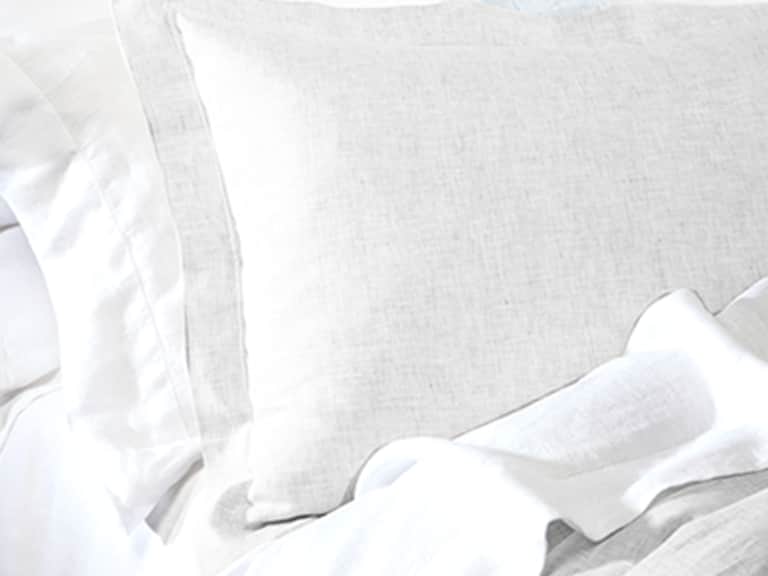
Linen is especially appealing when the desired mood is relaxed rather than formal. Its characteristic creases and gentle variations in the yarn can make a cover look lived in from the beginning. Some linen covers become softer through regular use and laundering, although the exact feel depends on the fabric’s construction and finish. That gradual change is part of the material’s appeal: it can develop a familiar, comfortable character rather than looking pristine and untouched.
Natural texture also works across decorating styles. On a modern sofa, a linen pillow can soften sharp edges. In a traditional bedroom, it can sit comfortably beside more tailored bedding. A woven cover can bring warmth to a minimal room, while a smooth cotton pillow can calm a layered, eclectic space. The fabric does not need to announce itself. Sometimes its contribution is simply making the room feel more inviting.
Start with the room, not the pillow
Before choosing covers, take a quick look at the space you want to refresh. Note the dominant colors, the main upholstery fabric, and the room’s existing patterns. Think about the feeling you want: crisp and orderly, soft and casual, or colorful and expressive. This little pause can prevent impulse choices that look appealing on their own but feel disconnected once they arrive home.
For a calm palette, choose a small family of related shades rather than trying to match every color exactly. Warm white, flax, oatmeal, and soft brown can create subtle variation without making a neutral room feel flat. In a space with cool gray or blue tones, a muted green or stone color can add depth while keeping the overall effect serene. If you want a brighter accent, one saturated color against quieter surroundings can feel more intentional than several unrelated colors competing at once.
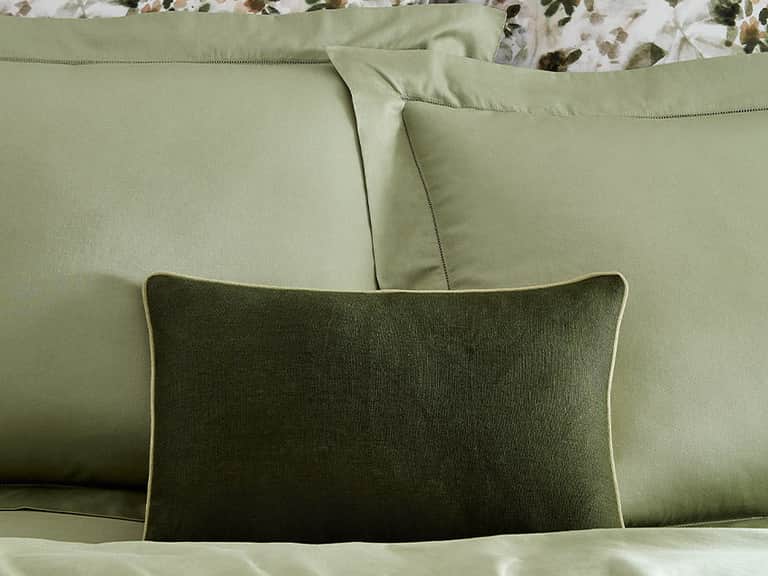
Color does not have to come only from a solid fabric. A small-scale stripe, a subtle two-tone weave, or contrast piping can introduce definition while preserving an understated look. For example, the Manarola 20-by-20-inch decorative pillow offers a two-color linen design with contrast piping and a hidden zipper. Its details illustrate how a simple change in color across the face of a pillow can give an arrangement a focal point without relying on an all-over print. It is a filled decorative pillow rather than a removable cover, so consider it when you want a ready-to-place accent.
Use scale to make the arrangement feel easy
Proportion is often what separates an inviting pillow arrangement from one that looks crowded. A cover should suit its insert, and the completed pillow should suit the furniture. A tiny cushion can disappear on a deep sofa; an oversized one can overwhelm a narrow chair. On a bed, a row of very large decorative pillows may leave little room for the pillows used for sleeping.
For a sofa, begin by looking at the seat depth and back height. Larger pillows can anchor the ends, while smaller ones create a transition toward the center. A single smaller accent can work beautifully on a compact chair, where a larger stack would take up valuable sitting space. There is no required number. Two or three thoughtfully chosen pillows can feel more polished than a crowded collection that has to be moved every time someone sits down.
On a bed, let the bed size and everyday routine guide the arrangement. A few decorative pillows can add a finishing touch, but the bed should still be easy to use at night. Consider the height of the headboard and the visual weight of the duvet or coverlet. If the bedding is light and minimal, a pair of textured accents may be enough. If the bed is visually substantial, a larger pillow at the back can help the arrangement feel balanced.
When mixing dimensions, think in layers. Larger pillows usually make a useful foundation, with smaller forms in front. A square cover paired with a smaller lumbar shape can add variety without requiring a complicated combination of prints. Keep the scale of the details in mind, too: a narrow piping edge or fine stitch can get lost on a very large pillow, while a bold pattern may dominate a smaller one.
Layer fabrics without making a pile
Texture is most effective when each layer has room to register. Try pairing a softly rumpled linen with smoother cotton, or setting a nubby weave against a clean, tailored surface. The contrast creates interest while the shared color family keeps the look cohesive. If every pillow has the same texture, the arrangement can appear uniform; if every pillow has a different finish, color, and pattern, it can feel restless.
A practical formula is to choose one leading texture, one complementary texture, and—if the room calls for it—one smaller accent. For example, relaxed linen might provide the main surface, while a smoother cotton cover adds a quieter counterpoint. A small-scale stripe or a two-color design can supply just enough visual movement. The formula is a guide, not a rule; the best combination is the one that suits both the room and the way it is used.
Pay attention to the difference between a cover and a finished decorative pillow. A removable cover typically fits over a separate insert, making it easier to change the look or wash the textile according to its care instructions. A filled pillow comes ready for display but may have different cleaning requirements. Checking the product details before arranging pillows helps avoid a care surprise later, especially when a decorative piece will sit in a high-use area.
Choose color with the seasons in mind
Seasonal styling does not have to mean replacing everything four times a year. A stable foundation of neutral or year-round colors can be refreshed with one or two accents. In spring and summer, lighter shades and airy textures may feel right; in autumn and winter, deeper colors and more substantial weaves can bring a sense of warmth. These are possibilities, not rules—personal preference and the room’s natural light matter more than a calendar.
Try to choose seasonal colors that relate to what is already in the room. A muted green can echo plants or outdoor views. A warm clay shade may connect with wood, leather, or terracotta. A soft blue can make a bright room feel cool and restful. The connection does not need to be an exact match; a shared undertone or a small repeated accent is often enough.
Storage can make seasonal changes simpler. Clean covers according to their care labels, let them dry completely, and fold them away in a dry, breathable place. Keeping a small selection of covers in rotation can bring variety without filling a closet with pillows. If you are storing filled cushions as well, avoid compressing them for long periods unless their construction allows it.
Care is part of good styling
A pillow cover is not only a color choice; it is a textile that will be touched, leaned on, and possibly exposed to food, pets, sunlight, or everyday dust. Before buying or using a cover, read its care instructions. Linen pieces can have different washing requirements depending on their construction, dyes, finishing, and any trim. A general assumption about how “linen should be washed” is not a substitute for the label.
For removable covers, check whether the fabric can be machine washed and whether it calls for a gentle cycle, cold water, or line drying. Covers with contrast piping, embroidery, specialty finishes, or delicate closures may need extra care. Some decorative pillows are intended for dry cleaning rather than home laundering. If a cover has a zipper, close it before washing when the care instructions allow; this can help protect the teeth and reduce snagging.
Spot cleaning may be appropriate for small marks, but test a discreet area first and follow the manufacturer’s guidance. Avoid scrubbing aggressively, which can distort the surface or spread a stain. A clean, dry cover should be fully dry before it goes back on an insert or into storage. Dampness trapped inside a cushion can lead to an unpleasant odor and may damage the textile over time.
For everyday maintenance, a gentle shake or light brushing can refresh some surfaces. Rotate decorative pillows occasionally so one side does not receive all the light or wear. Keep delicate fabrics away from prolonged direct sunlight, which can fade colors, and avoid placing a decorative cushion where it will be repeatedly compressed if maintaining its shape matters to you.
Make the insert and cover work together
The insert affects the way a cover looks and feels. A correctly sized insert generally helps a pillow hold its shape; an undersized one can leave the corners slack, while an overly large insert may strain the seams or zipper. Product guidance can help you choose an appropriate fit, but the desired result also depends on how firm or relaxed you like a pillow to appear.
Consider how the pillow will be used. A decorative cushion that is mostly for appearance may benefit from a fuller silhouette. A pillow that will be leaned against should feel comfortable and resilient rather than overly firm. If you are buying the insert separately, check the cover’s dimensions and any recommendations from its maker. For a cover with a hidden zipper, avoid forcing an insert that is too large through the opening.
Filled pillows require attention to their own materials and care needs. A linen exterior, for example, does not tell you what the inner filling is or how the whole pillow should be cleaned. Read the specifications for both the cover and the insert, particularly if allergies, animal-derived materials, or cleaning limitations are concerns. The most attractive choice is one that suits the household as well as the room.
A quick styling plan for a bedroom or sofa
When the options feel overwhelming, keep the process simple. Begin with the largest pillows you already own and decide whether their covers still suit the room. Then select one or two new textures that complement them. Hold fabric samples, if available, near the upholstery and bedding in both daylight and evening light; colors can shift depending on the room’s exposure and artificial lighting.
- Choose a palette: Pick a neutral base and one or two accent colors that already appear somewhere in the room.
- Mix surfaces: Combine a relaxed or nubby texture with a smoother fabric for contrast.
- Vary dimensions: Use a larger pillow as an anchor and a smaller one to add a change of scale.
- Leave breathing room: Stop before the sofa or bed feels crowded or inconvenient to use.
- Check the care label: Make sure the cleaning routine suits the location and level of use.
Try the arrangement, step back, and make one adjustment at a time. Move a pillow, remove one, or swap the front and back positions. The process should feel more like editing than decorating from scratch. If a room already has plenty of pattern, a quiet linen cover can serve as a visual pause. If the room is largely solid, a contrasting weave or two-tone accent can provide a little energy.
Natural texture, personal comfort
Decorative pillow covers are a flexible way to bring a room closer to the feeling you want: relaxed, composed, colorful, or softly layered. Natural fibers can add character through the weave itself, while a thoughtful mix of proportions keeps the arrangement looking balanced. Care, inserts, and daily use deserve as much attention as the color, because a pillow that is pleasant to live with is more likely to remain part of the room.
There is no single perfect arrangement. A bed may need only a few quiet accents; a sofa may benefit from a more playful mix. Start with what you own, notice which textures you enjoy touching, and choose covers that can work with the furnishings already in place. A modest update—a linen surface, a better-scaled pillow, or a seasonal color—can give familiar surroundings a fresh point of view while keeping the room unmistakably yours.